Wednesday, June 18, 2014

September 11th Timeline

The Soviets Invade Afghanistan
           In December of 1979, in the midst of the Cold War, the Soviets invade Afghanistan in order to try to spread communism


The Soviets Leave Afghanistan
            In May of 1988, the Soviets officially leave Afghanistan, making Osama Bin Laden a war hero to many Islamic follower. Also it gave them the confidence they would use to later pursue the other Super Power, the United States of America. 


Saddam Hussein Invades Kuwait
              On August 2, 1990, Suddam Hessein led Iraq to invaded Kuwait threatening Saudi Arabia.


Saudi Arabia Chooses the U.S.
            Looking for protection, Saudi Arabia had to choose between the U.S. military or Osama Bin Laden and al Qaeda. In the end they chose the U.S. which angered Bin Laden.


A Bomb in the World Trade Center
           February 26,1993. Ramzi Yousef drove a truck full of gasoline and a bomb under the World Trade Center where he parked it, ignited it, and escaped. The bomb makes a 7-story explosion, killing 6. But the bomb did not topple the towers, as Yousef had hoped. 


 A Bomb-Making Mishap
            On January 6, 1998 Ramzie Yousef was making a bomb in his apartment in the Philippines when one accidentally went off. When the police arrived, Yousef escaped, but his partner, Abdul Murad, was captured. Murad provided law enforcement with a lot of information regarding future plans, and Yousef's Toshiba laptop provided information on his plans to place time-delayed bombs on eleven U.S. flights. Fingerprints found in the apartment connected Yousef to the 1993 WTC Bombing. 


Bombing at the U.S. Embassy
        On August 7, 1998 there was a terrorist bombing at the U.S. Embassy in Kenya, shortly after the Declaration of War. Minutes later, a second bomb went off at the U.S. Embassy in Tanzania. 


The Terrorist Prepare for Attack
              Osama Bin Laden elects men to fly the planes, as well as muscle jackers, who will storm the cockpit and over power the pilots and flight attendants. The muscle jackers condition and train to kill people on board, while the ones who will fly the planes obtain U.S. Visas, fly to the U.S., and take flight training classes where they learn how to fly jet liners. 


Final Preparations
           Final preparations were made for the attacks. They bought tickets and planned out seating arrangements. Muscle Jackers sat up front to storm the cockpit and the ones who would take control sat a few rows back. They planned cross country flight to be sure there would be enough fuel so the plane would ignite upon impact.


The Attack
           On the 11th of September in 2001, the deadliest attack on U.S. soil took place. The first plane that was hijacked and crashed was American Airlines Flight 11 from Boston to Los Angeles. Fifteen minutes into the flight, that left at 8:00 AM, hijackers took over the plane and headed to their target, the World Trade Center. At 8:46 AM, Flight 11 crashed into the North Tower of the WTC. United Airlines Flight 174 was the next to leave. It had departed at 8:15 AM, and made impact with the WTC South Tower at 9:03 AM. The American Airlines Flight 77 left Washington Airport at 8:21 AM and was hijacked and crashed into the Pentagon East Wall at 9:45 AM. United Airlines Flight 93 left Newark at 8:43 AM and was hijacked, but the passengers were prepared to fight back. While Flight 93 was in the air, the South Tower of the WTC collapsed, killing most of the civilians and rescuers inside. The passengers on Flight 93 prepared to storm the cockpit and hopefully land the plane safely, they were able to take control of the plane but sadly, it was crashed into a field in Pennsylvania killing all passengers. At 10:28 AM, the North Tower also collapsed. The death tolls from this day come to 2,753 people in New York. Of those who perished, 343 were firefighters, 23 were police officers, and another 37 were Port Authority officers. At the Pentagon in Washington, 184 people were killed. And in Shanksville, Pennsylvania, all 40 passengers and crew members were killed.


The Memorial
          Ten years after the attacks on September 11, 2011, part of the new memorial was open. Two reflection pools that stood at the foot of where the towers once stood, bear the names of all the victims of the attacks. On May 15, 2014, the entire museum was dedicated, and it was opened on May 23, 2014. One of the main symbols of the memorial is the Freedom Tower. Standing at over 1,770 feet tall as the tallest building the Western Hemisphere, the Freedom Tower represents the unity of America and helps rebuild the nation after tragedy.


Monday, April 7, 2014

The Holocaust

The Holocaust, was the mass murdering of 6 million Jews and some other persecuted groups by German Nazis during WWII. The German Nazi ruler, Adolf Hitler, believed that the Jews were and inferior race, and that they threatened the purity of Germans. He also believed that Germans were the supreme race. What started off as simple discrimination, quickly erupted to the mass murdering of millions of Jews. At first, Jews were forced from there homes, and were forced to live in "ghettos". They were given curfews and weren't allowed in places such as public pools and movie theaters. Jews were also forced to wear a Star of David on their clothing to acknowledge the fact that they were Jewish.  In 1941, the Germans began to transport the Jews from the "ghettos" to concentration camps in the country. In the concentration camps, the Jews were starved and forced to work long hours with little water. Many were also killed in concentration camps. At first, the Jews were killed by being shot, but as time dragged on, the Germans began to "gas" the Jews, and basically burn them to death. But even those who weren't killed by the Germans were tortured. They were whipped and beaten often. And many Jews, died from starvation or injuries sustained from the whippings.

In this picture a young Jewish boy and many other Jewish people behind them are being forced from their homes and being escorted to live in "ghettos"


This photo depicts a Jewish family as they are being transferred from the ghetto to concentration camps on the country side.


The Germans took all of Jewish people's properties and in this picture you see thousands of wedding bands that were taken from the Jews by Germans.


A group of Jews are being led by German Nazis to the gas chambers.


Anne Frank was a young Jewish girl who's family went into hiding. Sadly they were caught and were sent to concentration camps where they all sadly died, except for the father

Monday, March 31, 2014

The Atomic Bombs

Once Harry Truman learned that the Manhattan Project (the research and development of an atomic bomb by the US), he realized that he would have to make a decision. He knew the bomb had the capability to end the war with Japan, but he also knew that the bomb would kill many innocent civilians. By this time, the Allies had already won in Europe, but the war in Japan was still going strong. The Allies demanded surrender of the Japanese and warned of mass destruction if they would not, but the Japanese said they would rather fight till the end then surrender unconditionally. After that, Truman decided to drop the bomb. The bombs left awful short term effects of Hiroshima and Nagasaki. Health problems came in phases. In the first few weeks, the injuries were mostly burns and broken bones and wounds from falling structures. The next couple of weeks led to damage from the radioactive rays. Victims suffered from loss of hair, anemia, and loss of white blood cells. And the damage lasted forever, victims dealt with deformities, abnormal scarring, sterility, as well as psychosomatic disorders. In addition, they had to somehow count the dead, which was difficult because some bodies were completely vaporized by the bomb and others didn't die immediately, but were killed from the effects of the bombing. In addition to short term health effects, there were also social effects from the bombings. First, the population of both Hiroshima and Nagasaki were effected, and many people were left with broken families. The effects from the bombings leaves many people, including myself, wondering, was it really worth it?


Friday, March 28, 2014

World War II- During the War


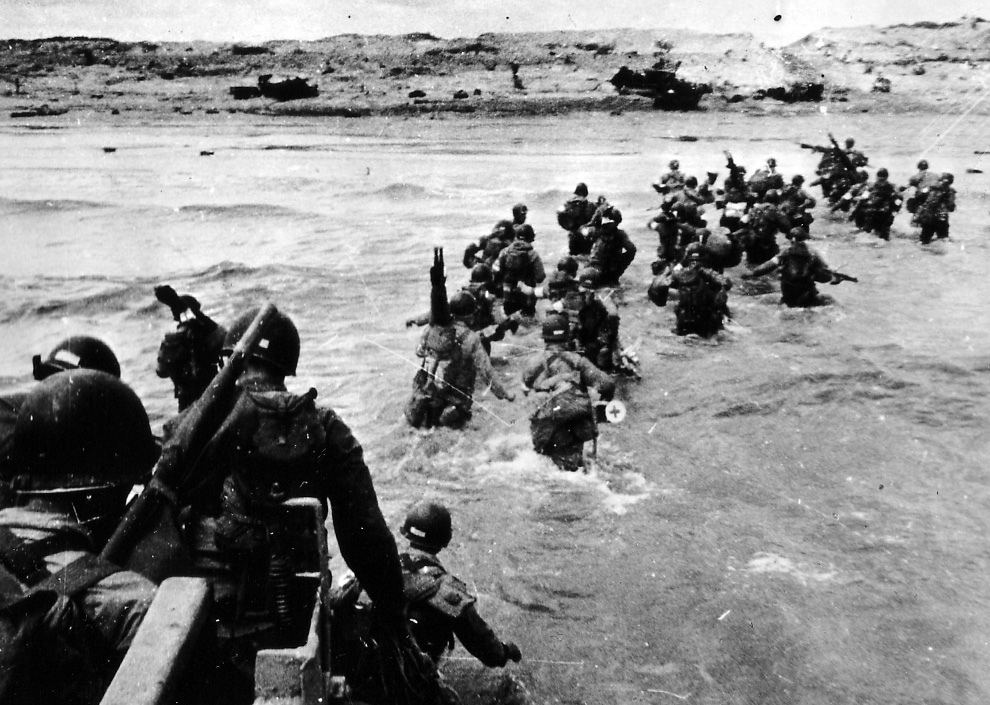
The attack on Pearl Harbor was a surprise military strike conducted by the Japanese against the United States naval base at Pearl Harbor, Hawaii, on the morning of December 7, 1941. The day is later recognized as a day which will live in infamy. It was just days later that the US officially entered WWII.


The Battle of Midway stopped Japanese advancement. They had no great victories after that. They lost four of their largest carriers and the best of their naval fighter/bomber pilots.


The Nazi's realized that they were going to lose the war and Hitler decided to do a last giant offensive. He sent most of his remaining troops in the hope that he could create a break in the American/British lines. He succeeded in pushing them back, which created a bulge in the American/British line. It was one of the bloodiest battles, but the Germans could ultimately not break through the American/British lines. They continued to fight on in Berlin in hope that they could surrender to the Americans rather than the Russians.


The Beginning of WWII


In this photo, president Franklin D. Roosevelt is seen addressing the country about World War II. This photo was taken on September 3, 1939, so in this photo the US had not yet entered the war. Most likely in this photo, Roosevelt was updating the country on the foreign affairs, and where the US stands on them. At this point, the US remained neutral. The US officially enters the war on December 8, 1941. Only a few short years after this photo was taken.

Cinderella Man

The Great Depression put many people out of jobs. The men having been thought as the bread winners felt it the worst. When they could not provide for their families they would drink to cope. This of course would carry home cause trouble there but also everywhere they went. The would have to ask for money from the government which would hurt their confidence. At home most would live paycheck to paycheck and afford the bare minimum of food and bills. Often parents would have to send their children away to another more stable home. Children old enough would notice the struggle and try to help but of course could not. If it got too bad they would have to live in Hoverville's which too was an embarrassment. The rich having been unaffected by the depression would not understand and there for not sympathize for them.